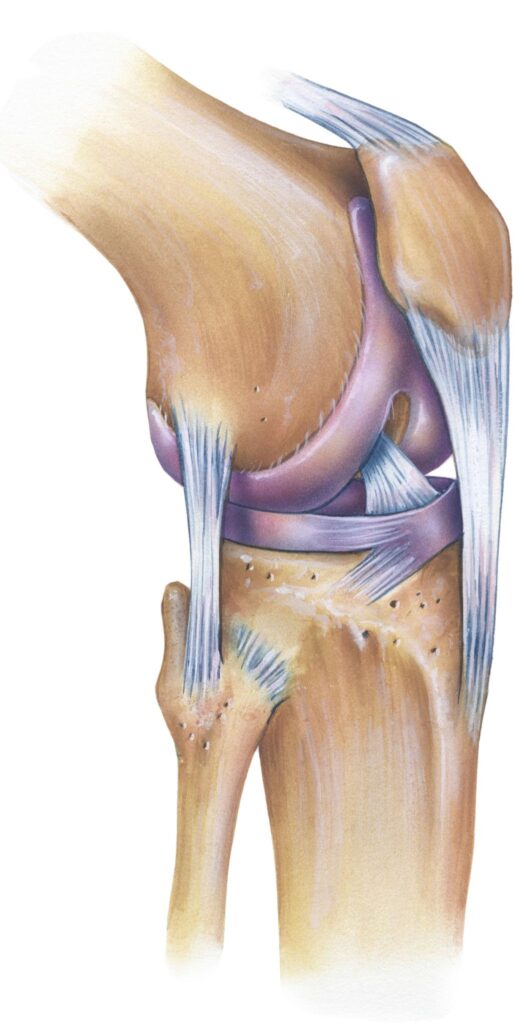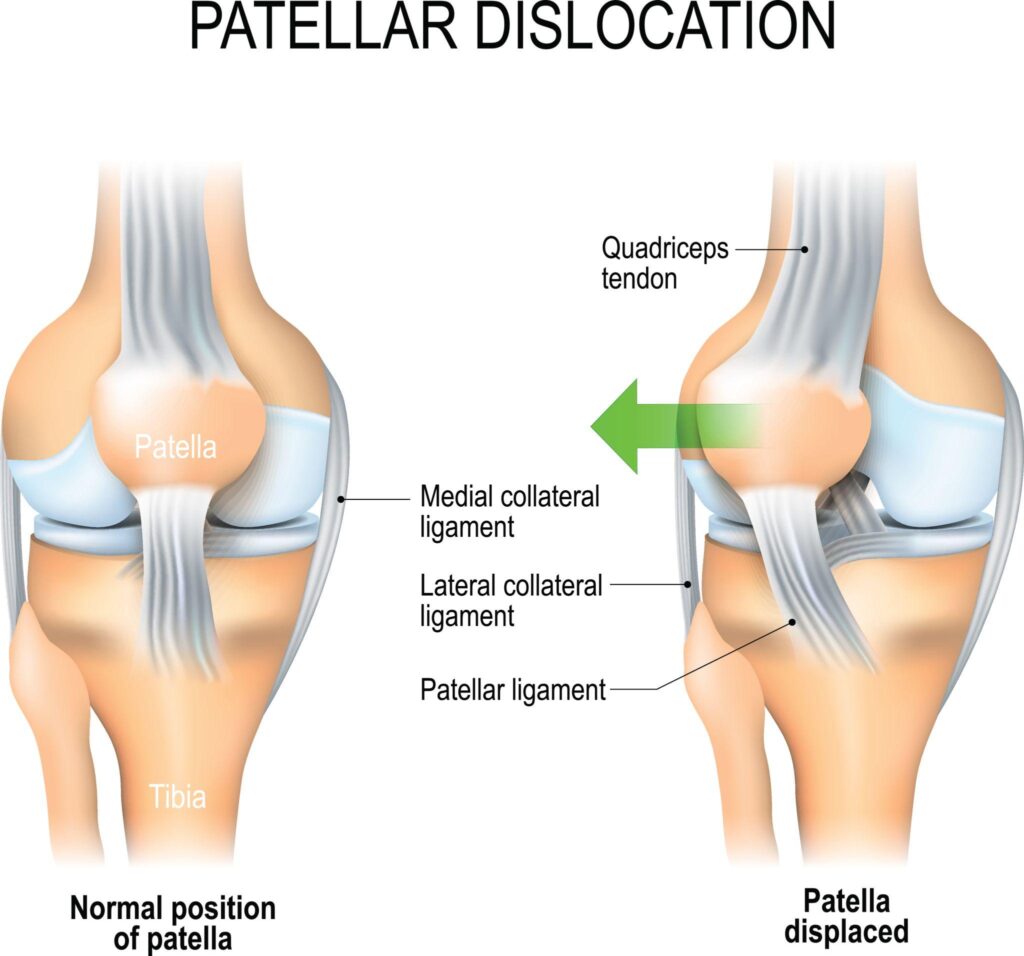
A patellar shift refers to the kneecap (patella) moving slightly out of its normal alignment in the femoral groove during movement. Even a small shift can significantly affect how forces are distributed in the knee joint, which often leads to knee pain, especially during activities like walking, climbing stairs, squatting, or sitting for long periods.
1. Uneven Pressure on the Joint Surface
Normally, the patella glides smoothly in the trochlear groove of the femur. When there is a shift (commonly lateral shift), the contact area becomes uneven.
- One side of the cartilage bears excess pressure
- The other side has reduced contact
This abnormal loading can irritate the cartilage and underlying bone, leading to anterior knee pain, commonly seen in Patellofemoral Pain Syndrome.
2. Increased Friction and Cartilage Stress
Because the patella is not tracking centrally, the joint experiences increased friction during knee flexion and extension. Over time this may cause cartilage softening or degeneration, known as Chondromalacia Patella.
Symptoms often include:
- Pain while climbing stairs
- Pain when getting up from sitting
- Clicking or grinding sensation in the knee
3. Muscle Imbalance Around the Knee
A patellar shift is often associated with imbalance between the medial and lateral stabilizers of the patella, especially the quadriceps.
For example:
- Weak vastus medialis oblique (VMO)
- Tight iliotibial band
This imbalance pulls the patella laterally, worsening the shift and creating a cycle of maltracking and pain.
4.Patellar alignment is also influenced by structures above and below the knee:
- Foot pronation or collapsed arch
- Hip internal rotation or weak hip abductors
These biomechanical factors alter the line of pull of the quadriceps, encouraging lateral patellar tracking and increasing patellofemoral stress.