Article 08: Slipped disc, Disc bulge and Herniated Disc
Slipped Disc:
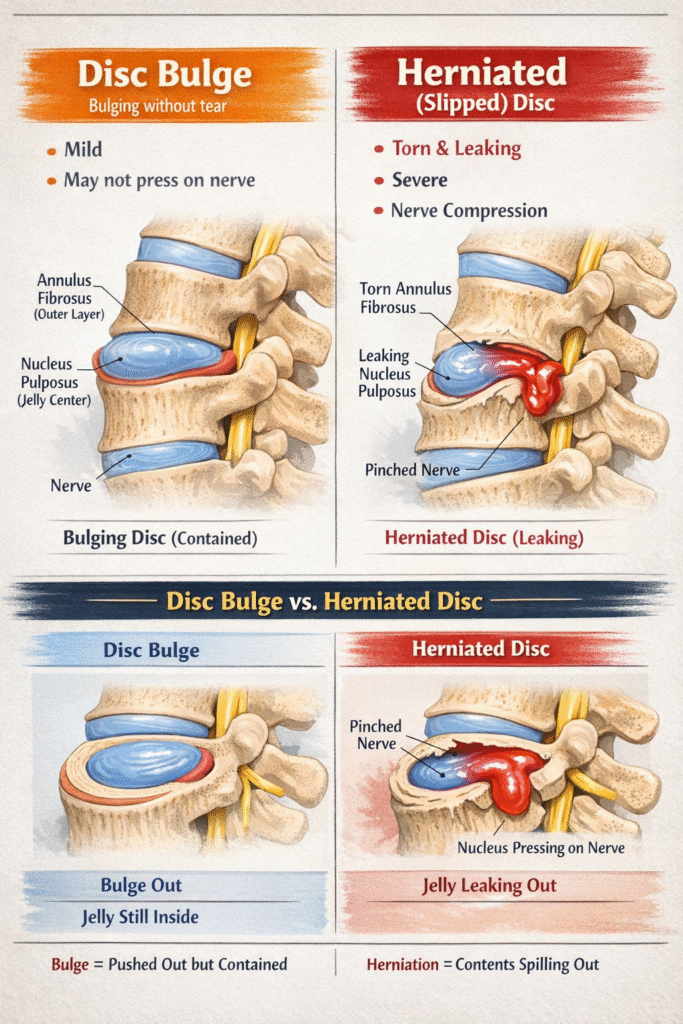
Slipped disc is basically when the soft jelly like center of the spinal disc (nucleus pulposus) pokes out through a tear in the tougher outer layer (annulus fibrosus). This bulge can press on nearby nerves causing pain, numbness or weakness.
Common spots are lumbar (lower back) and cervical (neck). The disc is like a jelly donut and when it gets compressed, the jelly squeezes out. It can cause sciatica if it pinches the nerve root in the lumbar region.
Symptoms include.. sharp burning pain in the back radiating to arms /legs. Tingling, numbness and/or muscle weakness.
Slipped disc and Disc bulge:
People often mix them up but there’s a subtle difference.In disc bulge, the disc’s outer layer remains intact but is pushed out of shape (like a slightly squished jelly donut). It might not press on the nerve and is often asymptomatic.
Slipped disc:
In slipped disc, the outer layer is torn and the jelly like center leaks out, often irritating the nerves. Both disc bulge and slipped disc can cause pain but slipped disc is usually more severe.
Slipped Disc and Herniated Disc:
Technically both the terms mean the same thing. Both mean the soft center of a spinal disc has poked through the outer layer, potentially irritating the nerves. Herniated Disc is a medical term and more accurate. It’s when the nucleus pulposus (jelly center) herniates through the annulus fibrosus (tough outer ring). Slipped Disc is a common term used by layman. People use it to describe any disc issue but in actual means herniation.
In summary, they both mean the same thing, a disc ‘leaked’ that might be causing trouble.
[Bulge= pushed out but still contained]
[Herniation=contents spilling out]
Download The Synergy Medical Yoga App
You can experience the magic of medical yoga therapy at comfort of your home. Download the Synergy Medical Yoga app and book an experience visit ( Search for Synergy MYT on the app store or play store or Scan the QR codes below )